
Choosing between a 20 ft and a 40 ft shipping container looks simple. Same width, same height, one is just longer. But the wrong pick costs you real money. Order too small and you rent a second unit in three weeks. Order too big and it will not fit down your driveway, or you pay for space you never use.
This guide is for Colorado Springs contractors, business owners, and homeowners trying to size a container the first time. You get the real interior numbers, the delivery math for local lots, and a clear way to decide.
The quick answer
Pick a 20 ft container if your site is tight, your load is heavy and dense, or you need less than about 1,000 cubic feet. It fits most driveways and commercial lots.
Pick a 40 ft container if you have a long, open approach and a bigger job. It gives you roughly double the space and a lower price per cubic foot.
One rule decides most of these calls: match the container to your site first, then to your load. If your property has a short driveway, a cul-de-sac, or a steep grade, read the delivery section before you do anything else.
What fits inside each size
Both sizes are 8 feet wide and 8 feet 6 inches tall on the outside. Only the length changes. The width and height stay the same, so the real difference is floor length and total volume. Here are the interior numbers that matter.
| Spec | 20 ft container | 40 ft container |
| Interior length | 19 ft 4 in | 39 ft 5 in |
| Interior width | 7 ft 8 in | 7 ft 8 in |
| Interior height | 7 ft 10 in | 7 ft 10 in |
| Floor space | about 150 sq ft | about 305 sq ft |
| Interior volume | about 1,170 cubic feet | about 2,385 cubic feet |
| Door opening | 7 ft 8 in wide, 7 ft 6 in tall | 7 ft 8 in wide, 7 ft 6 in tall |
A 40 ft holds about double the volume of a 20 ft. Cubic feet are hard to picture, so here is what that space looks like in real items.
A 20 ft container holds:
- About 10 standard pallets on the floor
- Roughly 4 to 6 dirt bikes, depending on how you park them
- The contents of a two to three bedroom home
- A king mattress at 76 by 80 inches, laid flat across the floor with room to walk past it
A 40 ft container holds:
- About 20 to 21 standard pallets on the floor
- Roughly 10 to 12 dirt bikes
- The contents of a three to five bedroom home
- Long items like lumber, ladders, or kayaks in two rows, end to end
One catch on the 20 ft. Dense, heavy loads like tools, tile, or machinery often hit the weight limit before they fill the floor. When your cargo is heavy, a 20 ft is often the smarter buy even if the volume looks small.
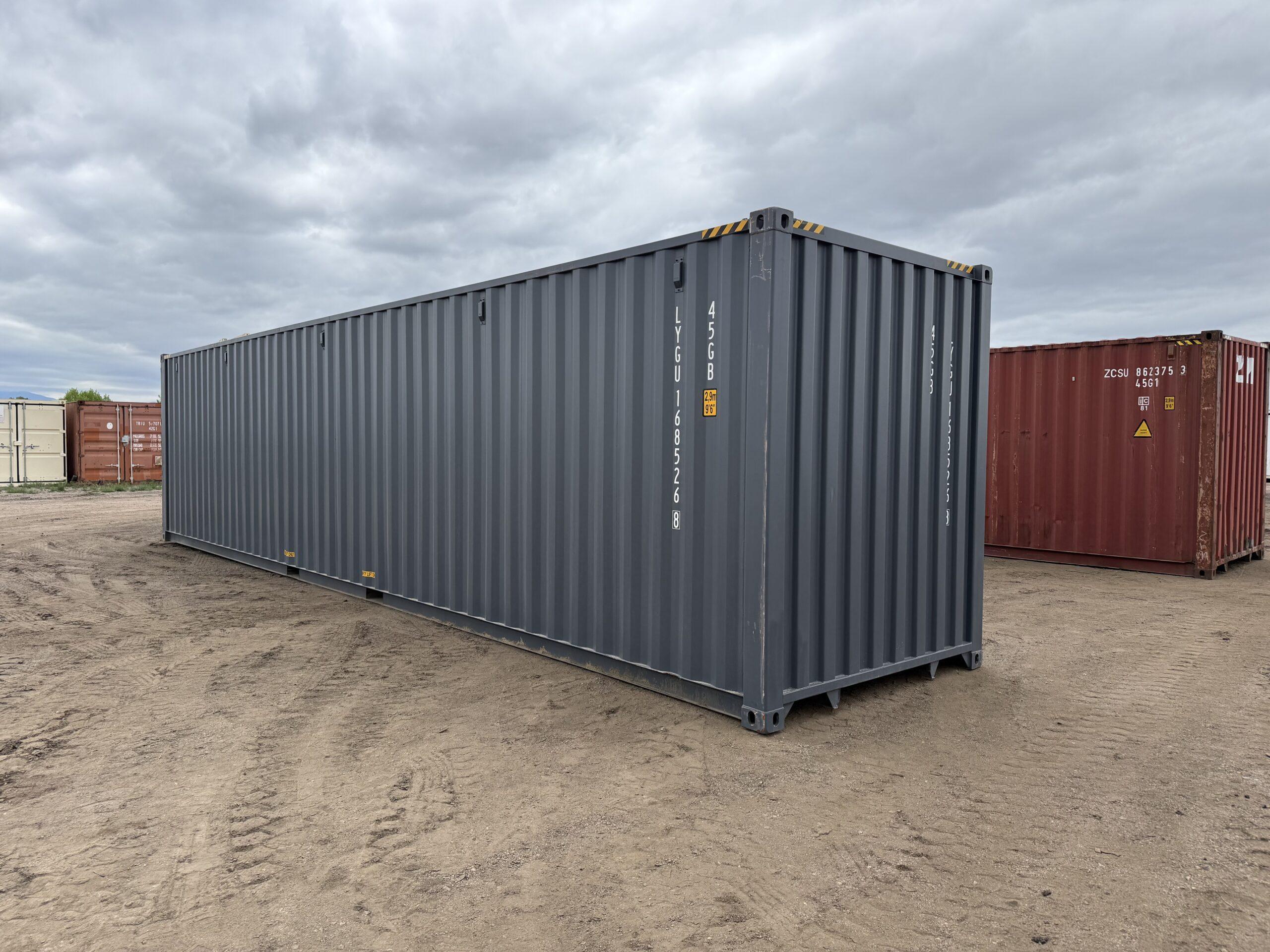
Will it fit on your Colorado Springs property?
This is the step most people skip, and it causes most failed deliveries. A tilt-bed truck slides the container off the back of the trailer. To do that, the driver needs a straight, level, clear path.
Here is the straight-line space each size needs:
- A 20 ft container needs about 60 to 65 feet of straight-line clearance.
- A 40 ft container needs about 100 to 110 feet, and some yards ask for up to 125 feet.
That 40 ft number is the deal breaker. Plenty of Colorado Springs cul-de-sacs, short driveways, and steep hillside lots on the west side cannot give a truck 100 feet in a straight line. A grade that is too steep also stops a tilt-bed from unloading safely. Tight lots near Old Colorado City and downtown run into the same wall.
You also need room above and to the sides:
- About 14 feet of overhead clearance for a standard container, and more for a high cube. Watch for power lines, tree limbs, and eaves.
- About 12 feet of width for the truck to turn in.
- Firm, level ground. Soft soil or wet grass can sink a truck and cancel the drop.
If any of that is tight, you still have options, and a 20 ft may be the only unit that fits. Send photos and measurements, and our delivery team can check your site before you place an order.
Door-end clearance and door swing
The cargo doors sit on one end. They are hinged to swing a full 270 degrees, so they fold flat against the sides. Even so, you need clear apron space in front of the door end to open and load. Plan for at least the width of the doors plus a few feet, and more if a forklift will drive up to it.
Park a 40 ft tight against a fence or wall on the door end and you cannot open it. Decide which way the doors should face before delivery, because that choice sets how the truck drops the unit.
Short on swing room? A roll-up door opens straight up and needs no swing space. Shelving also changes how much of the interior you can actually use. Plan the inside before it arrives with our container shelving and door upgrades.
Cost per cubic foot: why a 40 ft often wins on value
A 40 ft gives you about twice the cubic feet of a 20 ft. It almost never costs twice as much. So the price per cubic foot on a 40 ft usually comes out lower.
That makes a 40 ft the better value, but only when your property and your project need the volume. A lower price per cubic foot means nothing if half the container sits empty, or if the truck cannot reach your lot.
Run the math on the space you will actually use, not the space on the spec sheet. If you plan to keep the unit long term or expand later, buying can beat renting. Once you settle on a size, compare current shipping containers for sale in Colorado Springs.
When a 40 ft high cube makes sense
A high cube adds one foot of height. The 40 ft high cube stands 9 feet 6 inches on the outside and about 8 feet 10 inches inside, for close to 2,700 cubic feet. The footprint does not change, so it needs the same floor space and the same delivery approach as a standard 40 ft.
That extra foot of height earns its keep when you:
- Stack storage two levels high
- Store tall equipment, racking, or machinery that scrapes a standard ceiling
- Convert the container into an office and want a less boxed-in feel
When you need more room but cannot add length, a high cube buys it by going up instead of out.
Which size should you choose?
Match the container to your site and your load, in that order.
Choose a 20 ft when:
- Your driveway, lot, or job site is tight
- Your load is heavy and dense
- You need short-term or overflow storage
- You want the lower total price
A 20 ft is the go-to for contractors on small lots and homeowners in the middle of a remodel. See 20-foot shipping container rentals in Colorado Springs.
Choose a 40 ft when:
- You have a long, open, level approach
- You are storing the contents of a large home or a full inventory
- You want an office-and-storage combo in one unit
- You want the lowest price per cubic foot
A 40 ft earns its footprint on farms, yards, and large commercial sites. See 40-foot shipping container rentals.
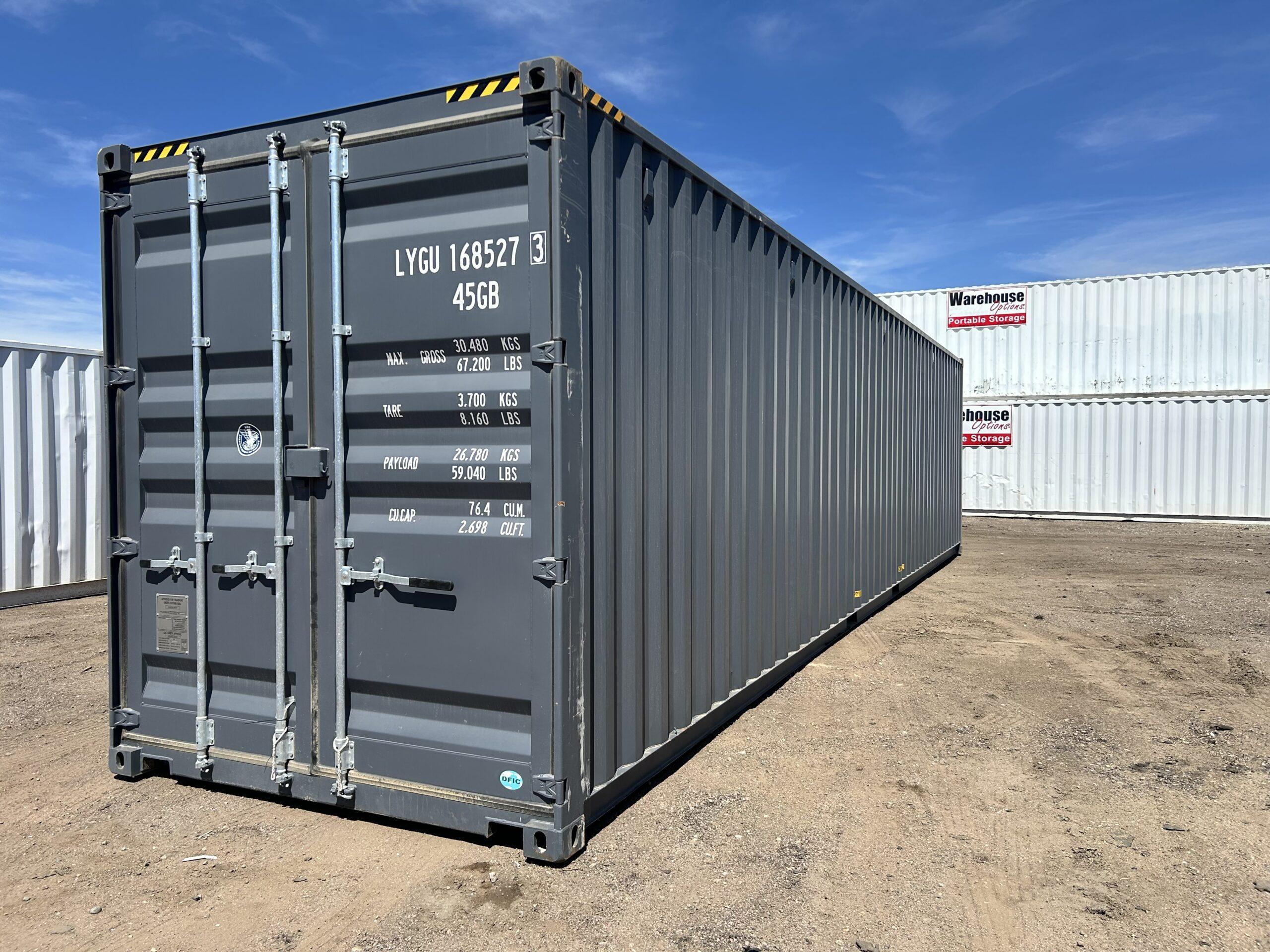
Quick questions before you book
Can I rent instead of buy?
Yes. Warehouse Options rents both sizes across Colorado Springs and Southern Colorado, short term or long term. Buying makes more sense for permanent, on-site storage.
How much space do I really need for delivery?
Plan for about 65 feet of straight-line clearance for a 20 ft and about 100 to 110 feet for a 40 ft, plus 14 feet of overhead room and firm ground. Not sure your site works? Send us photos.
Is one 40 ft cheaper than two 20 ft containers?
Usually yes, on both price and space, as long as your site can take the larger unit and your load fills it.
Still deciding? Call 719-390-1900 or get a free quote, and we will match the right size to your site and your timeline.